


Unraveling the Royal Pulse of Mysore: A Journey Through History and Culture
- Sreejith TR
- Jun 5, 2025
- 8 min read
Updated: Jul 1, 2025

Mysore nestled in the heart of Karnataka (India), a city where history whispers from every corner, and tradition gracefully coexist with modernity. Often called the cultural capital of Karnataka, Mysore is a heaven for heritage lovers, spiritual seekers and nature enthusiast alike.
At the centre of Mysore grandeur lies the Mysore palace, a stunning Indo- Saracenic
architectural marvel that comes alive during Dussehra festival with 1000,000 lights,
walking through its opulent halls and intricate carvings feels like stepping in to a regal
past. The city was once the seat of Wodeyar dynasty, and their legacy continues to eco in
its palace, temples and museums.
Let’s discover-more about the “Cultural Capital of Karnataka”.
Mysore Palace - A Treasure House.

Experiencing Mysore Palace is a multisensory journey through history, architecture, and culture. As you approach, the palace’s imposing Indo-Saracenic silhouette set against
manicured gardens instantly evokes a sense of regal grandeur . Walking through the ornate gate flanked by bronze tigers, you feel the weight of centuries—every arch and dome bearing witness to the Wadiyar dynasty’s legacy.
The palace interior features intricately carved mahogany ceilings, stained-glass windows, and polished marble floors that exude opulence. Key chambers include the Kalyana Mantapa (wedding hall) with its lotus-shaped stained-glass ceiling, the Durbar Hall housing the royal throne, and the State Reception Room adorned with Belgian crystal
chandeliers and ornate carpets. The Golden Howdah, a ceremonial seat encrusted with 80 kg of gold leaf, stands as the centrepiece of the palace’s treasure collection.

Mysore Palace’s exterior is distinguished by its five-story central pavilion crowned with a
gilded dome reaching 145 feet, flanked by smaller domes and turrets that create a skyline
of royal elegance. Mysore Palace’s exterior is distinguished by its five-story central pavilion crowned with a gilded dome reaching 145 feet, flanked by smaller domes and turrets that create a skyline of royal elegance.

Mysore Palace, locally known as Amba Vilas, stands as the crowning jewel of Mysuru
city and the former seat of the Wadiyar dynasty. Perched at the foot of Chamundi Hill, it
is celebrated for its grand Indo-Saracenic architecture. The historic evaluation of the palace is, The site of Mysore Palace has housed successive fortifications since the 14th century, with the original wooden structure giving way repeatedly after fires and conflicts . . In 1638, a lightning strike razed the palace, and later in 1739 during Hyder Ali and Tipu Sultan’s reigns, portions were again destroyed by conflict. After yet another fire in 1897, the Wadiyars decided to rebuild in more durable materials, marking the end of the wooden era.

Commissioned by Maharaja Krishnaraja Wadiyar IV, the new palace’s design was
entrusted to British architect Henry Irwin, who blended Mughal, Rajput, and Gothic
elements into the prevailing Indo-Saracenic style. Construction began in 1897 and
concluded in 1912, employing stone, brick, and wood to ensure resilience against fire.
The palace was officially inaugurated on 11 November 1912, symbolising Mysore’s
resurgence under enlightened princely rule. The palace is open daily from 10 am to 5:30 pm, Photography inside is prohibited, though the exterior and courtyards are popular for snapshots.
Chamundi Hills - sacred Heights Timeless views.

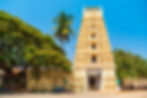
Visiting Chamundi Hills is a multifaceted experience that blends spiritual pilgrimage, scenic vistas, historical lore, and natural beauty.Chamundi hills is a popular pilgrimage site and tourist destination known for its scenic beauty and spiritual significant. Chamundi Hills, rising to about 3,489 ft (1,064 m) above sea level, sits some 13 km from Mysuru city center and offers sweeping views of the city and surrounding landscapes. Top of these hills stands the Chamundeshwari Temple, a Dravidian-style shrine whose origins date back to the 12th century under the Hoysala dynasty, with major expansions and the iconic seven-tier gopuram added by Vijayanagara and Wodeyar patrons.

The Nandi statue on Chamundeshwari (Chamundi) Hill is a monumental, monolithic sculpture of Shiva’s bull, carved from a single block of black granite. Standing approximately 16 feet (4.9 m) tall and 24 feet (7.6 m) long, it is renowned as the third-largest Nandi sta The hill and temple together form a focal point of Mysuru’s spiritual life, dedicated to Goddess Chamundeshwari (a fierce form of Durga), celebrated as the vanquisher of the buffalo demon Mahishasura, whose massive statue greets pilgrims at the temple entrance.

Chamundi hill provides a sweeping vista of mysore cityscape-including the iconic
mysore palace, karanji lake and Lalith mahal. making it a premier viewpoint for
photographers and sightseers alike. Beyond its scenic value, the hill serves as a
biodiversity hotspot, their mosaic of Dry deciduous and scrub forest, grasslands and
rocky outcrops supports over 480 species of flowering plants across 94 families, rich
array of medical herbs and upward of 150 bird species.
St Philomena’s Church - Gothic Majesty in Mysore’s Heart.
Visiting St. Philomena’s Church offers a blend of spiritual serenity, architectural splendor, and historical depth. Constructed in 1936 under Maharaja Krishnaraja Wadiyar IV, this Neo-Gothic cathedral was inspired by Germany’s Cologne Cathedral and stands as one of Asia’s tallest churches, with twin spires reaching approximately 175 feet (53 meters) high.

As you approach, you’re greeted by meticulously manicured lawns and a grand façade featuring pointed arches, buttresses, and stained glass windows that depict key events from Christ’s life . Inside, the cool, hushed nave seats up to 800 worshippers and offers a contemplative atmosphere accentuated by the filtered light streaming through vibrant stained glass panels.A visit here typically takes about one to two hours, giving ample opportunity to admire intricate carvings, attend a mass, explore the crypt housing St.Philomena’s relic, and capture the church illuminated against Mysore’s evening sky.

Stepping inside, the first sensation is one of hushed calm. The long central nave, flanked by rows of wooden pews, converges on the altar at the far end . The vaulted ceiling soars above, its ribbed supports converging to form pointed arches that echo throughout the space, lending an airy yet solemn quality . Wooden pews polished over decades provide seating for up to 800 worshippers, and visitors often note how the faint echo of footsteps and soft murmurs underscore the cathedral’s acoustic design . Light filtering through the stained glass bathes the interior in jewel-toned hues, especially during morning and late-afternoon masses when the angle of the sun is just right.

While the overarching design is Neo-Gothic, several interior elements reflect indigenous culture: female statues are depicted wearing sarees, and intricate carvings adorn pillars with motifs inspired by South Indian artistry. The blend of local iconography and European architecture symbolizes Mysore’s openness to diverse religious and cultural expressions, characteristic of the Wadiyar dynasty’s tolerant rule. Today, the church is recognized as one of Mysore’s heritage buildings, featured in travel guides and celebrated in regional history as both a spiritual and architectural landmark.
Brindavan Garden - Greenery by day Glitter by Night.
Brindavan Gardens is a sprawling 60-acre terraced botanical expanse at the base of the
Krishnarajasagara (KRS) Dam in Mandya District, roughly 12 km from Mysore city.Its symmetrical layout features lush lawns, vibrant flower beds, topiary, and intricate waterways, culminating in the world-famous multihued musical fountain show held nightly. Commissioned in 1927 by Sir Mirza Ismail and designed by German botanist-landscape
architect Gustav Hermann Krumbiegel, the gardens were completed in 1932 and today draw
nearly 2 million visitors annually.

Spanning 60 acres, the garden is partitioned into three terraces connected by cascading fountains and water channels . The terraced layout includes manicured lawns, ornate flower beds displaying seasonal blooms, and intricate topiary works that demonstrate meticulous horticultural planning . Symmetrical pathways flank the central watercourse, enabling visitors to traverse the garden from the dam façade down to the lower terraces, absorbing panoramic views of both water and greenery.

The key attraction and activities of Brindavan garden is the, Musical fountain - a highlight is the synchronised water, light and music Show a captivating spectacle that runs after sunset. Horticulture farms- explore naguvana and chandravana horticulture Farm, showcasing diverse plant life.
Gardens - wader through terraced gardens, enjoying the vibrant flora and fauna.
Topiary works- admire the artistic sculptures of animals created by clipping shrubs.
Children’s Park - A dedicated area for kids with swings and other play facilities.
Lake and boating - Enjoy a boat ride on the lake within.
Wildlife and museums.

Sri Chamarajendra Zoological Gardens (Mysore Zoo) is one of India’s oldest and most
renowned zoological parks, spanning approximately 157 acres in Indiranagar, Mysore.
Established in 1892 by His Highness Sri Chamarajendra Wodeyar Bahadur, the zoo began as an educational initiative rather than a royal menagerie and has since grown into a major
centre for wildlife conservation, education, and recreation. Today, it houses over 1,450
individual animals representing more than 200 species—including India’s largest captive
elephant herd, the country’s only great apes, and rare reptiles—while offering robust
conservation, breeding, and outreach programs.

The Mysore Rail Museum, officially the Railway Museum at Mysore, is India’s second
regional rail museum, established in 1979 by Indian Railways. This open-air exhibit
showcases a remarkable collection of vintage steam locomotives, royal carriages, inspection
cars, and signalling equipment, alongside a gallery of photographs and paintings tracing the
evolution of Indian railways.
From Royalty to your plate.
Mysore’s culinary landscape—from its royal palace origins to bustling street stalls offers a
treasure trove for food hunters.

You can explore iconic dishes like Mysore Pak and Bisi Bele Bath born in the Wodeyar
kitchens; chart a street-food trail featuring Uggani and Chiroti; delve into heritage sweet
shops famed for filter coffee and Mysore pak; spotlight modern cafés and fusion eateries;
compare vegetarian staples like Mysore masala dosa ,Ragi Mudde with local non-veg
specialties; profile food festivals such as Dasara’s food markets.

Embark on your own Mysore food adventure—let each bite tell a story of royal kitchens,
market alleys, and modern creativity.
Mysore Dussehra - Elephants,Elegances and Eternal Glory.
Experiencing Mysore Dussehra is a sensory feast that melds royal heritage, religious devotion, and vibrant public celebrations into a ten-day spectacle . The festival transforms the city into a luminous wonderland, with the Mysore Palace aglow in nearly 100,000 bulbs each evening, and cultural programs that showcase Karnataka’s artistic traditions . Central to the festivities is the Jamboo Savari procession on Vijayadashami day, featuring colorfully adorned elephants carrying the idol of Goddess Chamundeshwari on a golden mantapa, watched by lakhs of spectators . Alongside these grand spectacles, the Dasara Exhibition offers games, stalls, and regional crafts, while rituals such as worship of the royal sword and Ayudha Puja underscore the festival’s deep spiritual significance . From daytime temple visits to nighttime illuminations, Mysore Dussehra offers an immersive journey into a living tradition that has spanned over four centuries

The festival commemorates Goddess Chamundeshwari’s victory over the demon Mahishasura—a legend that lends the city its historical name “Mahishuru,” later anglicized to “Mysore” . As a state-sponsored celebration, Dussehra in Mysore has evolved into a ten-day event that blends classical and folk arts, royal ceremonies, and modern entertainment, reflecting both the city’s heritage and Karnataka’s cultural diversity.

Every evening from 7 PM to 10 PM during Dasara, the Mysore Palace is illuminated with nearly 100,000 bulbs, turning its Indo-Saracenic façades into a glowing architectural marvel.The play of light and shadow accentuates the palace’s domes, turrets, and arches, drawing visitors to gather on the surrounding lawns and vantage points across the city to witness the nightly spectacle.

On Vijayadashami—the tenth and final day—lakhs of devotees and tourists line the streets as the Jamboo Savari (grand elephant procession) begins at the Mysore Palace and proceeds to the Bannimantap Grounds, covering approximately three kilometers . The central attraction is the idol of Goddess Chamundeshwari placed on a golden mantapa, carried atop a lead elephant named Abhimanyu, whose silken drapes and brass howdah weigh over a thousand kilograms.Between the elephants, cultural troupes perform folk dances such as Talamaddale and Kamsale, while music bands play drums, trumpets, and indigenous instruments, generating rhythmic energy that resonates through the crowd.

Throughout the festival, the palace grounds host open-air concerts showcasing Carnatic music, Bharatanatyam, Yakshagana, and contemporary performances.
The Dussehra exhibition Located opposite the Mysore Palace, the Dasara Exhibition Grounds—also known as Veer Durbar. Sprawling across several acres, the exhibition is divided into zones that showcase Karnataka’s industrial achievements, agricultural produce, and regional handicrafts, along with entertainment stalls, amusement rides, and food courts . Each evening, the exhibition is decorated with lights and banners, creating a carnival-like atmosphere that draws families, school groups, and solo travelers to explore the diversity of products and performances on display.
As your journey through Mysore concludes, it’s evident that this city offers
a harmonious blend of regal heritage, vibrant culture, and culinary delights. Mysore isn’t just a destination; it’s an experience that resonates long after you’ve left. As you reflect on your time here, consider sharing your own stories and memories, inspiring others to explore and appreciate the wonders of this remarkable city!is remarkable city!